Category: VAPT Services

  • Blog
  • Category: VAPT Services
Common Security Gaps in Startups

Common Security Gaps in Startups

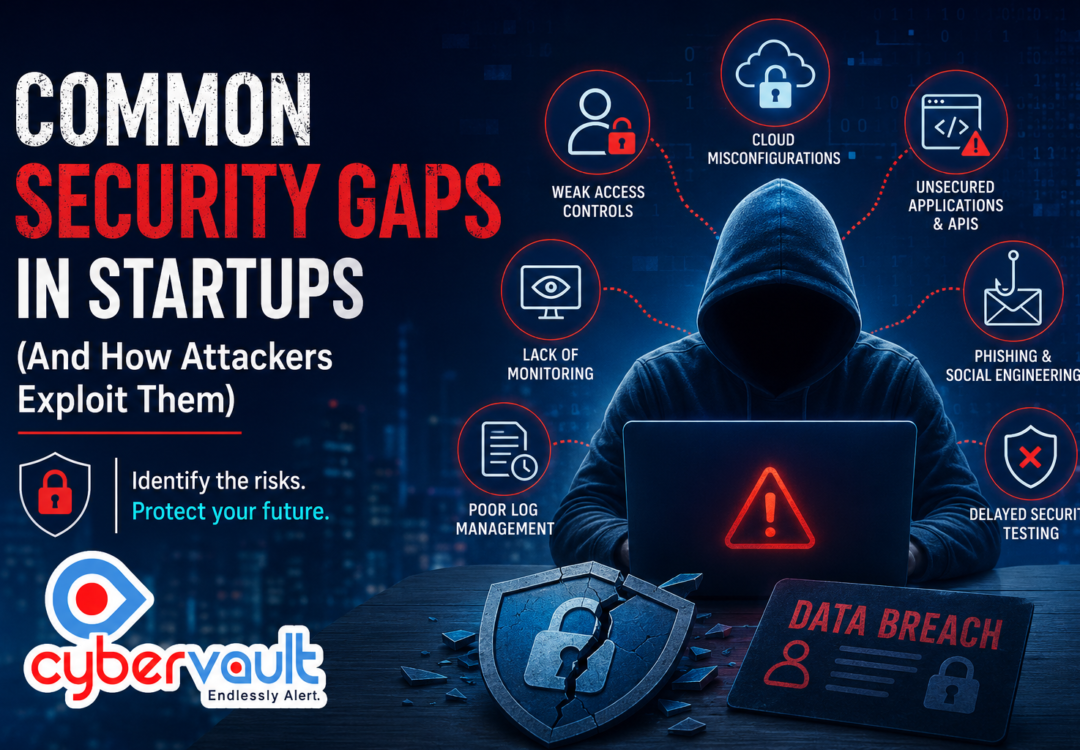
Common Security Gaps in Startups (And How Attackers Exploit Them) Startups thrive on innovation, speed, and growth. However, in the race to launch products and acquire customers, cybersecurity often takes a back seat. Many startups assume they are too small to become targets, but attackers frequently view startups as easy entry points due to limited security controls and immature security practices. According to the Verizon Data Breach Investigations , small and medium-sized businesses continue to be attractive targets because of weak defenses and valuable customer data. For startups, a single cyber incident can result in financial losses, reputational damage, and regulatory challenges.   1. Weak Access Control One of the most common security gaps is poor access management. Employees often share credentials, use weak passwords, or retain unnecessary administrative privileges. Attackers exploit these weaknesses through credential stuffing, brute-force attacks, and phishing campaigns. Once access is gained, they can move laterally across systems and compromise sensitive data. Recommended Solution: Implement Multi-Factor Authentication (MFA), role-based access control, and regular access reviews. 2. Unsecured Web Applications and APIs Modern startups heavily depend on web applications and APIs. Unfortunately, insecure coding practices, misconfigurations, and insufficient testing often introduce vulnerabilities. Common issues include: Broken authentication SQL Injection Cross-Site Scripting (XSS) Insecure API endpoints These vulnerabilities are regularly highlighted by the OWASP Top 10  and remain among the most exploited attack vectors. To identify such risks early, startups should conduct regular Vulnerability Assessment and Penetration Testing (VAPT) 3. Cloud Misconfigurations  Cloud platforms provide scalability and flexibility, but misconfigured storage buckets, security groups, and access policies can expose sensitive information to the public internet. Attackers continuously scan cloud environments for exposed assets. Even a single misconfigured storage bucket can lead to large-scale data leaks. Regular cloud security assessments and configuration reviews are essential to minimize exposure. 4. Lack of Security Monitoring Many startups focus on prevention but overlook detection. Without centralized logging and monitoring, malicious activities can remain undetected for weeks or months. Organizations should implement continuous monitoring, log analysis, and incident detection capabilities as part of a broader Cyber Security Services Program 5. Employee Awareness Gaps Human error remains one of the leading causes of security incidents. Employees may unknowingly click phishing links, download malicious files, or share sensitive information. Attackers increasingly use social engineering techniques because they target people rather than technology. Regular security awareness training can significantly reduce the likelihood of successful phishing attacks and credential compromise. 6. Delayed Security Testing Many startups postpone security testing until a customer, investor, or compliance requirement demands it. By that stage, vulnerabilities may already be present in production environments. Proactive testing helps identify weaknesses before attackers discover them. Security should be integrated into the software development lifecycle rather than treated as a final checkpoint. Conclusion Cybercriminals actively target startups because they often possess valuable data but lack mature security controls. Weak access management, vulnerable applications, cloud misconfigurations, and insufficient monitoring create opportunities for attackers to gain access and cause significant damage. By investing in proactive security assessments, continuous monitoring, and employee awareness, startups can significantly reduce their risk exposure and establish a strong foundation for secure growth. The question isn’t whether startups will be targeted—it’s whether they are prepared when the attack happens.

Read More
From “Set and Forget” to “Continuous Testing”: The Evolution of VAPT for Modern Threats – Copy

From “Set and Forget” to “Continuous Testing”: The Evolution of VAPT for Modern Threats – Copy

From “Set and Forget” to “Continuous Testing”: The Evolution of VAPT for Modern Threats For years, organizations treated Vulnerability Assessment and Penetration Testing (VAPT) as a one-time compliance checkbox — conduct a test, fix reported issues, and archive the report. This “set and forget” mindset may have worked in slower IT environments. But in today’s cloud-native, DevOps-driven ecosystems, threats evolve daily — and so must security testing. At Cybervault we’ve seen firsthand how modern security requires continuous validation, not periodic review. The Limitation of Traditional VAPT Traditional VAPT engagements were: Annual or bi-annual Compliance-focused Static in scope Perimeter-centricHowever, attackers operate continuously. Incidents like the SolarWinds breach demonstrated how sophisticated supply chain attacks can bypass traditional security checks With frequent code deployments, cloud migrations, and API integrations, the attack surface changes faster than annual assessments can track. Why Continuous Testing Is Essential ? 1. Frequent Code Releases DevOps pipelines push updates regularly. Each release may introduce new vulnerabilities. 2. Expanding Attack Surface Cloud assets, exposed APIs, and misconfigured storage buckets increase external exposure. 3. Emerging Vulnerabilities Communities like OWASP constantly update critical risk categories, reflecting the evolving threat landscape. Continuous VAPT ensures vulnerabilities are detected and remediated before exploitation. What Modern Continuous VAPT Includes ? Automated vulnerability scanning Scheduled manual penetration testing Red team simulations Attack surface monitoring Re-testing after major deployments At Cybervault’s VAPT Services, we integrate continuous validation aligned with DevSecOps principles to help organizations stay resilient against real-world threats. From Compliance to Risk-Based Security Old approach:“Did we pass the audit?” Modern approach:“Are we secure against active attack techniques today?” Continuous testing shifts focus from documentation to exploitability and business impact. Conclusion Cybersecurity is no longer a yearly activity — it’s an ongoing discipline. Organizations that adopt continuous VAPT reduce breach risks, improve remediation timelines, and build long-term cyber resilience. The question is no longer whether you’ve conducted a VAPT —but whether you’re continuously testing against evolving threats.

Read More
VAPT: Safeguarding Digital Fortresses

VAPT: Safeguarding Digital Fortresses

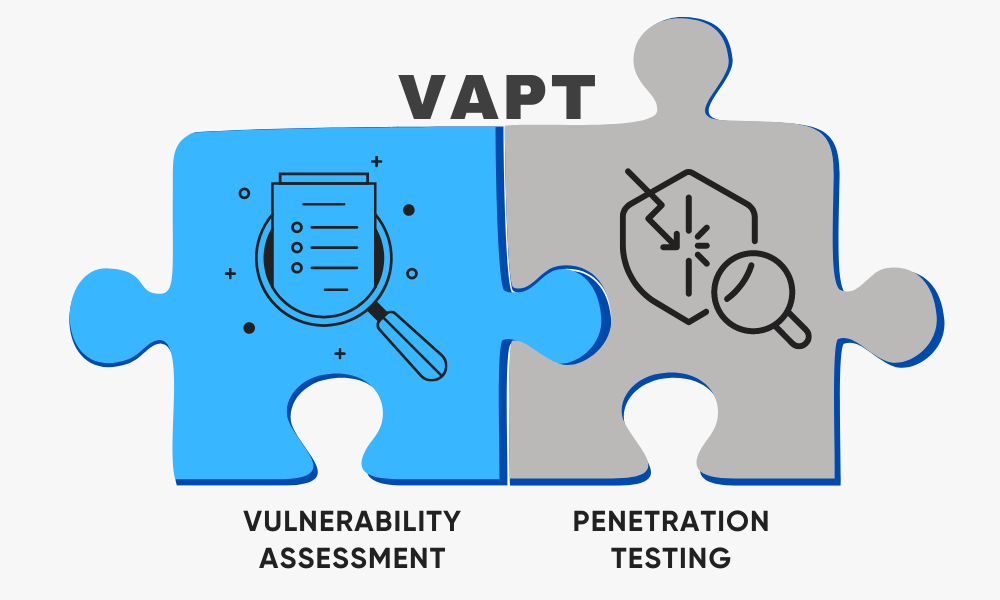
Introduction to VAPT Vulnerability Assessment and Penetration Testing (VAPT) is a crucial component of cybersecurity. It involves identifying and mitigating potential security risks within an organization’s information technology infrastructure. Let’s delve deeper into what VAPT involves: Vulnerability Assessment (VA) What is Vulnerability Assessment? VA is the process of systematically scanning and assessing an organization’s systems, networks, and applications to identify vulnerabilities. These vulnerabilities could be misconfigurations, outdated software, or weak security controls. Why is Vulnerability Assessment Important? Early detection of vulnerabilities helps prevent security breaches. It provides insights into an organization’s security posture. Penetration Testing (PT) What is Penetration Testing? PT involves simulating real-world attacks on an organization’s systems to identify exploitable vulnerabilities. Ethical hackers (penetration testers) attempt to breach security defenses. Why is Penetration Testing Important? PT validates the effectiveness of security controls. It helps uncover hidden vulnerabilities that automated scans might miss. “VAPT: Invest in data security and safeguard your business.” By partnering with Cybervault IT Services, you can gain peace of mind knowing your systems are secure and your data is protected. VAPT is a valuable tool for any organization that takes data security seriously. By proactively identifying and addressing vulnerabilities, you can significantly reduce your risk of a cyberattack. Consider VAPT as an investment in the security of your data and the future of your business. In an ever-evolving digital landscape, VAPT plays a pivotal role in safeguarding organizations from cyber threats. Cybervault IT Services is a trusted partner in the realm of cybersecurity expertise. Additionally, if you’re looking for the best VAPT services company in Pune, India; you can consider Cybervault IT Services as a trusted partner. “In the dynamic landscape of cybersecurity, VAPT stands as a sentinel, guarding digital fortresses against unseen threats. Invest wisely, secure your data, and fortify your business for the future with Cybervault IT Services, your trusted partner in safeguarding information.”

Read More
What is Network Penetration Testing?

What is Network Penetration Testing?

Imagine a detective exactly combing through a crime scene, searching for every hidden clue and potential entry point. Now, replace the detective with an “Ethical Hacker” and the crime scene with your organization’s network. That, in essence, is what Network Penetration Testing (pen testing) is all about But before we go deeper, let’s address the elephant in the room: why would anyone want to intentionally attack their network? The answer lies in the proactive approach to cyber security. Pen testing simulates a real-world cyber-attack conducted by ethical hackers with permission and within defined boundaries. By mimicking the methods of malicious actors, it uncovers vulnerabilities in your network security that traditional scans and assessments might miss. Think of it as a stress test for your digital defences. Network Penetration Testing helps you identify: 1. Unpatched software and out-dated systems: These are easy targets for attackers, and Penetration Testing exposes them before they can be exploited. 2. Misconfigurations in security settings: Even the most robust security tools can be rendered ineffective if not configured correctly. Penetration Testing pinpoints these misconfigurations for rectification. 3. Weak passwords and insecure user practices: Human error is often the weakest link in the security chain. Penetration Testing can simulate phishing attacks and social engineering tactics to assess employee awareness and identify potential breaches. The Benefits of Going Undercover: The value of Penetration Testing goes beyond simply identifying vulnerabilities. It provides: – A prioritized list of risks: Penetration Testing reports not only highlight the security holes but also rank them based on their potential impact, allowing you to focus on the most critical issues first. – Improved incident response: By understanding how attackers might infiltrate your network, you can develop more effective incident response plans. Remember, organizations like Cybervault IT Services specialize in conducting thorough network Penetration Tests to safeguard your digital assets and keep cyber threats at bay. Is Penetration Testing Right for You? Whether you’re a large enterprise or a small business, Cybervault IT Services Penetration Testing can be a valuable tool for strengthening your cyber security. It’s particularly crucial for organizations that: Handle sensitive data (e.g., financial information, personal data) Operate in highly regulated industries Rely heavily on technology for their operations Remember, before embarking on your Penetration Testing adventure, carefully consider your specific needs and choose a reputable security professional with the expertise to conduct a thorough and effective assessment. With the right approach, Cybervault IT Services Penetration Testing can be the key to unlocking a more secure and resilient digital future for your organization.

Read More