Category: Security

  • Blog
  • Category: Security
Top 10 Emerging Cyber Threats and How to Defend Against Them

Top 10 Emerging Cyber Threats and How to Defend Against Them

Top 10 Emerging Cyber Threats and How to Defend Against Them Cybersecurity is no longer a back-office concern—it’s a boardroom priority. As businesses embrace cloud computing, AI-driven tools, and remote work, cybercriminals are evolving faster than ever. According to recent reports, global cybercrime damages are projected to hit $10.5 trillion annually by 2025. Staying ahead requires not only awareness of today’s threats but also preparedness for tomorrow’s. Here are the Top 10 Emerging Cyber Threats in 2026—and practical steps to defend against them. 1. AI-Powered Cyber Attacks Threat: Hackers are leveraging AI to craft more convincing phishing emails, automate malware, and bypass traditional security tools. Defense: Invest in AI-driven security solutions, continuously train employees on recognizing phishing attempts, and implement multi-layered threat detection. 2. Deepfake Identity Fraud Threat: Criminals use deepfakes to impersonate CEOs, employees, or vendors—tricking organizations into financial fraud or data leaks. Defense: Establish multi-factor approval processes for financial transactions and adopt tools that detect manipulated media. 3. Supply Chain Attacks Threat: Attackers target third-party vendors or software providers to infiltrate larger organizations. Defense: Enforce vendor risk assessments, implement zero trust architecture, and regularly monitor third-party integrations. 4. Ransomware as-a-service (RaaS) Threat: Ransomware kits are sold on the dark web, making it easier for less-skilled hackers to launch devastating attacks. Defense: Maintain regular offline backups, deploy endpoint protection, and create a tested incident response plan. 5. Cloud Misconfigurations Threat: As businesses move to the cloud, misconfigured servers, APIs, or storage buckets become easy entry points for attackers. Defense: Conduct regular cloud security audits, enable encryption by default, and follow the shared responsibility model with cloud providers. 6. IoT Device Exploits Threat: Smart devices (CCTV cameras, sensors, wearables) often lack robust security, creating weak links in networks. Defense: Segment IoT devices from core networks, update firmware regularly, and deploy IoT security monitoring tools. 7. Quantum Computing Threats Threat: While still emerging, quantum computing could eventually break traditional encryption methods. Defense: Begin exploring post-quantum cryptography and stay updated with evolving encryption standards. 8. Insider Threats Threat: Disgruntled employees or careless staff remain one of the biggest vulnerabilities. Defense: Implement least privilege access, monitor user behavior with UEBA (User and Entity Behavior Analytics), and foster a culture of cybersecurity awareness. 9. API Exploits Threat: APIs power modern applications, but insecure APIs expose sensitive data and create backdoors for attackers. Defense: Use API gateways, enforce authentication and rate limiting, and perform continuous penetration testing. 10. Critical Infrastructure Attacks Threat: Energy, healthcare, and transportation sectors are prime targets for nation-state attacks and cyber warfare. Defense: Strengthen OT (Operational Technology) security, segment critical systems, and collaborate with government threat intelligence networks. Final Thoughts Cybersecurity in 2026 isn’t just about defense—it’s about resilience. Organizations must adopt a proactive, layered security approach that combines technology, policies, and human awareness. The threats may evolve, but with the right strategy, businesses can stay ahead of attackers. 💡 Key takeaway: Cybersecurity is not a one-time project—it’s an ongoing commitment to adapt, defend, and thrive in the digital age.

Read More
Phishing: Unmasking Cyber Threats and Safeguarding Your Digital Realm

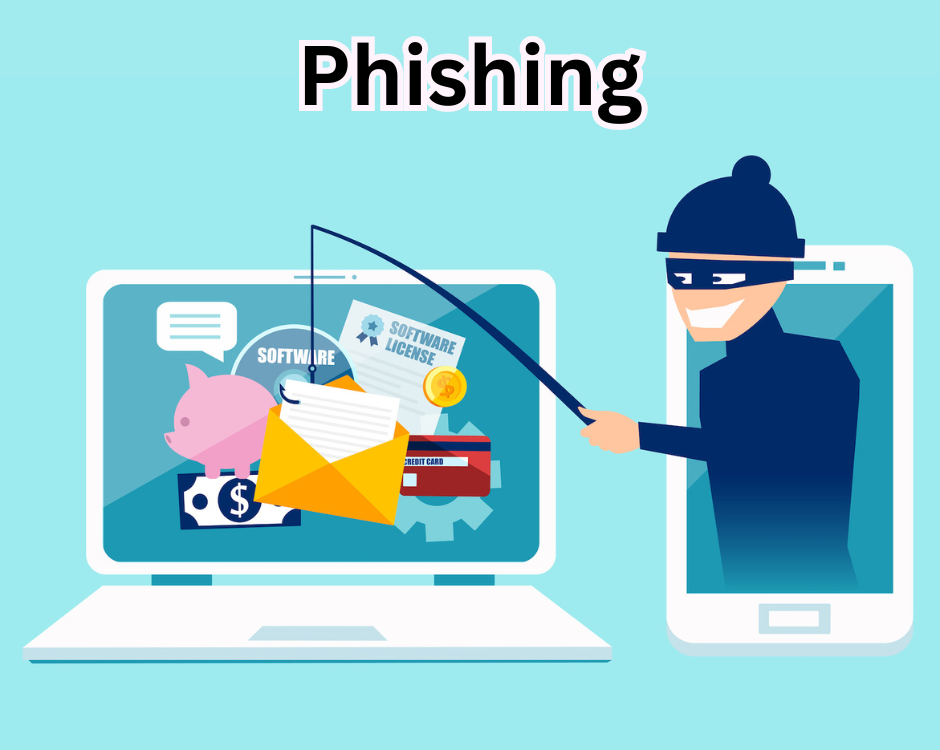
Phishing: Unmasking Cyber Threats and Safeguarding Your Digital Realm

In today’s interconnected world, cyber threats loom large, and one of the most insidious among them is phishing. This deceptive technique preys on human psychology, exploiting trust and urgency to compromise sensitive data and create chaos. In this blog, we’ll delve into the depths of phishing, explore its threats, and most importantly, discuss how you can fortify your defences against it. At the forefront of cybersecurity, Cybervault IT Services stands out as the best phishing simulation company, providing cutting-edge solutions to combat this evolving danger. What Is Phishing? Phishing is like a digital disguise. Cybercriminals craft fraudulent emails, text messages, or websites that look real, tricking people into sharing sensitive information or executing harmful actions. Here’s how it works: Deceptive Bait: Phishers pose as trusted entities—colleagues, banks, or service providers—enticing recipients to take action. Urgency and Fear: Urgent requests or alarming scenarios create pressure, pushing victims to act impulsively. Common Tactics: Email Phishing: Bogus emails mimic official communications, urging users to click links, download attachments, or reveal credentials. Spear Phishing: Targeted attacks customized for specific individuals or organizations. Whaling: Focused on high-profile targets like executives. Business Email Compromise (BEC): Hijacking legitimate email accounts for malicious purposes. Common Threats of Phishing Attacks: Identity Theft: Phishing attacks often lead to identity theft, where cybercriminals gain unauthorized access to personal information, enabling them to impersonate the victim for malicious purposes. Financial Fraud: By tricking individuals into providing financial details, attackers can engage in fraudulent activities, including unauthorized transactions and draining bank accounts. Credential Theft: Phishing attacks frequently target login credentials for email accounts, social media, or other online platforms, compromising user accounts and potentially leading to broader security breaches. Ransomware: In some cases, phishing attacks serve as a gateway for the deployment of ransomware, encrypting valuable data and demanding a ransom for its release. How to Overcome Phishing Threats? Education and Training: Knowledge is the first line of defences. Organizations and individuals should invest in comprehensive phishing training programs to educate users about the various tactics employed by cybercriminals. Cybervault IT Services stands out as the best phishing training provider, offering tailored programs to enhance user awareness. Use Advanced Security Solutions: Employing advanced email security solutions and antivirus software can help detect and block phishing attempts before they reach the intended targets. Multi-Factor Authentication (MFA): Implementing MFA adds an extra layer of security by requiring users to provide multiple forms of identification, reducing the risk of unauthorized access even if credentials are compromised. Regular Phishing Simulations: Companies can assess their employees’ susceptibility to phishing attacks by conducting regular simulations. Cybervault IT Services, as the best phishing simulation company, offers realistic scenarios to test and improve your organisation’s resilience against phishing threats. Cybervault IT Services: Your Shield Against Phishing Fortunately, you can defend yourself against phishing scams. Here are some key tips: Be Wary of Unfamiliar Senders: Don’t click on links or open attachments from emails or texts from unknown senders. Check Sender Addresses Carefully: Look closely at the sender’s email address. Phishing emails often have subtle typos or use generic greetings like “Dear Customer.” Don’t Rush: Phishing emails often create a sense of urgency to pressure you into acting hastily. Take a moment to scrutinize the message before clicking anything. Hover Over Links: Before clicking a link, hover your mouse over it. A preview of the actual website address should appear. If it doesn’t match the displayed text, don’t click! Strong Passwords: Use unique and strong passwords for all your online accounts. Cybersecurity Training: Regular training can equip employees to identify and avoid phishing attempts. As a trusted name in cybersecurity, Cybervault IT Services stands at the forefront of defence. If you’re a business owner, consider investing in professional cybersecurity training for your staff. Here at Cybervault IT Services, we offer the best phishing simulation programs to educate your employees and create a strong defence against cyberattacks. Our best phishing training teaches employees to recognize phishing attempts and safeguards your company’s sensitive information. By staying vigilant and taking proactive measures, you can protect yourself and your organization from the dangers of phishing. Remember, knowledge is power – so stay informed and stay safe! For more information, visit https://cybervaultitservices.com/

Read More
The ROI of Cybersecurity: Why Protection is Cheaper Than Breach

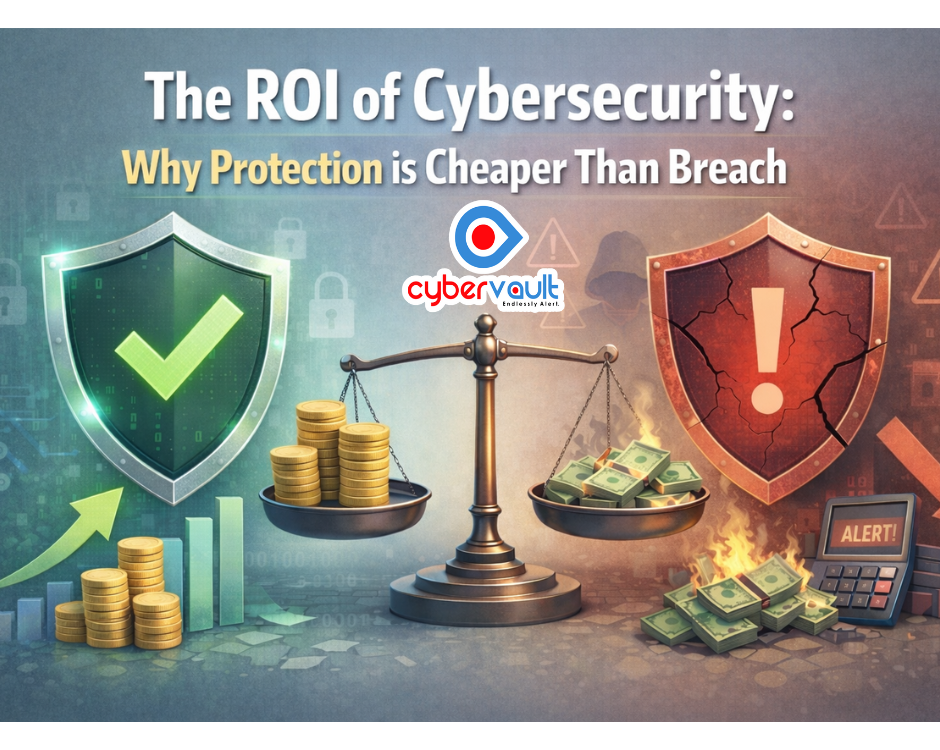
The ROI of Cybersecurity: Why Protection is Cheaper Than Breach

The ROI of Cybersecurity: Why Protection is Cheaper Than Breach In today’s hyper-connected world, cybersecurity is not just an IT expense—it’s a business investment with measurable returns. Yet, many organizations still hesitate to allocate sufficient budgets for robust protection, believing security measures are too costly. The reality? The cost of a breach far outweighs the cost of prevention. According to IBM’s Cost of a Data Breach Report 2024, the average global cost of a breach is $4.45 million—a number that continues to rise every year. Beyond financial loss, breaches damage brand reputation, customer trust, and compliance standing. Let’s break down why cybersecurity delivers a powerful Return on Investment (ROI) and why protection is always cheaper than breach. True Cost of Breach When attackers strike, the impact extends well beyond ransom payments or lost data. Hidden costs pile up, often multiplying the damage: • Downtime: Business operations may halt for days or weeks, causing lost revenue. • Regulatory Fines: Non-compliance with GDPR, HIPAA, or other standards leads to hefty penalties. • Reputation Damage: Customers lose trust—some never return. • Incident Response & Recovery: Emergency forensics, legal teams, and PR management are expensive. • Lost Competitive Edge: Sensitive IP (intellectual property) in the wrong hands can set businesses back years. 💡 A single breach can cripple small businesses, while enterprises face long-term erosion of brand equity. Cybersecurity as a Business Investment Just like insurance, cybersecurity provides protection against unpredictable but inevitable risks. When measured against the costs of a breach, the ROI is clear. 1. Cost Avoidance Preventing one breach often offsets years of security investments. 2. Operational Resilience Proactive security ensures minimal downtime and business continuity. 3. Regulatory Compliance Meeting compliance requirements avoids fines and demonstrates trustworthiness to customers. 4.Customer Trust & Retention Strong security builds confidence, attracting security-conscious clients and retaining existing ones. 5. Competitive Advantage In industries like finance, healthcare, and SaaS, robust cybersecurity can be a market differentiator. Best Practice to maximize cybersecurity ROI Adopt a Risk-Based Approach: Focus resources on protecting the most critical assets. Implement Zero Trust Architecture: Reduce insider threats and lateral movement. Use AI-Driven Threat Detection: Stop advanced attacks before they cause damage. Train Employees Continuously: Human error remains the #1 attack vector. Regular Backups & Incident Response Plans: Reduce downtime and recovery costs. Final Thoughts Cybersecurity should never be seen as a cost center—it’s a profit protector. Every investment in protection pays dividends in the form of avoided breaches, stronger compliance, and higher customer trust. 💡 Key takeaway: In 2026, the organizations that thrive will be those that treat cybersecurity as a strategic business enabler—because protection is always cheaper than breach.

Read More